Satria Rezki Fernanda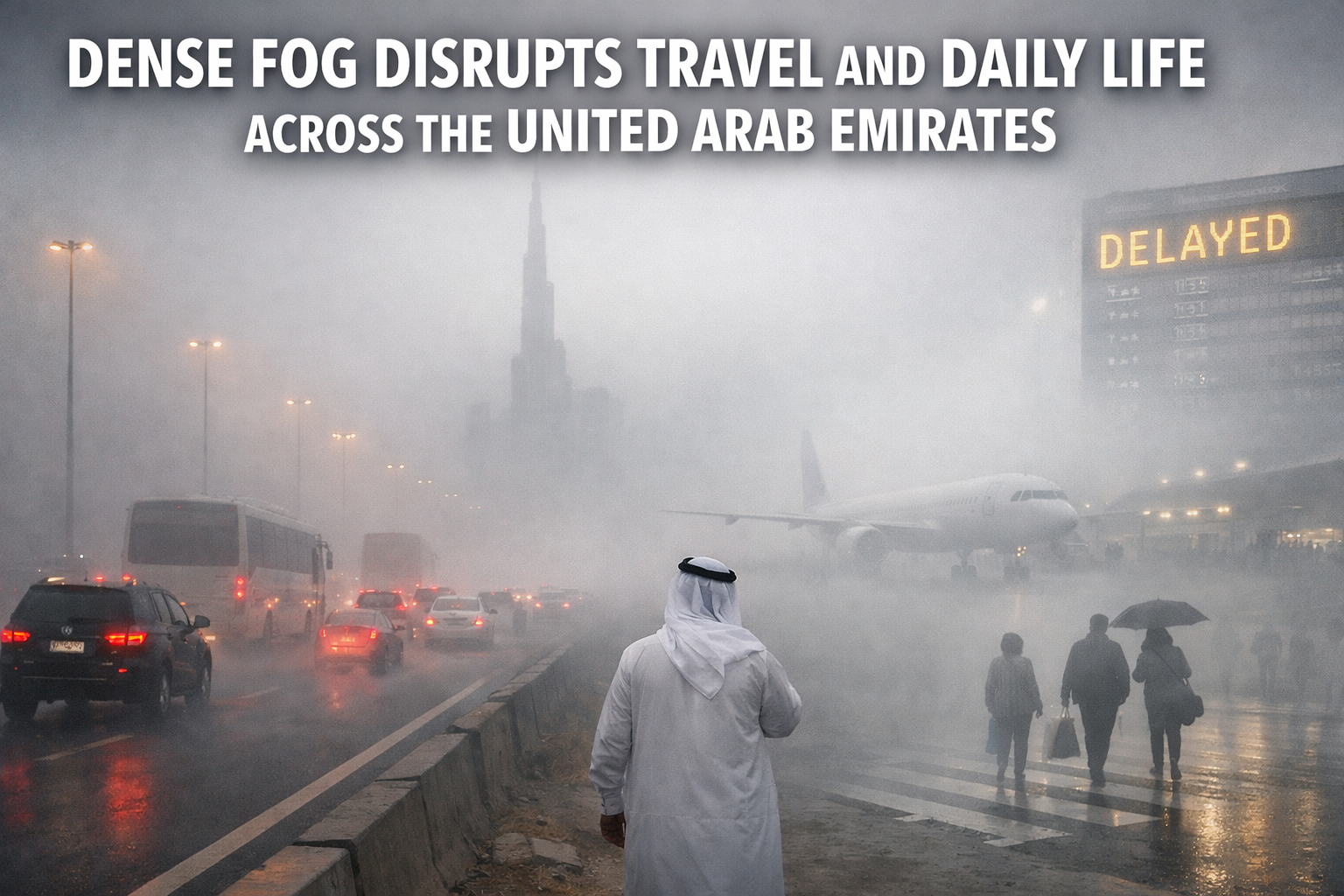
Thick fog blanketed large parts of the United Arab Emirates on Friday morning, significantly disrupting transportation networks and daily routines as authorities issued warnings about dangerously low visibility. The weather phenomenon, which affected major cities and coastal areas, led to traffic delays, flight disruptions, and heightened safety concerns across the country. Officials urged residents and travelers to exercise caution as conditions evolved throughout the day.
According to national weather authorities, the fog developed during the early morning hours due to high humidity levels combined with calm winds and cooler overnight temperatures. These conditions created an environment where moisture condensed close to the ground, forming dense fog banks that reduced visibility to less than 100 meters in some locations. Motorists in several emirates reported near standstill traffic as vehicles slowed to avoid accidents.
In major urban centers such as Dubai and Abu Dhabi, the impact was immediately felt. Police departments issued public safety advisories through social media, warning drivers to reduce speed, use low-beam headlights, and maintain safe distances between vehicles. Emergency services reported an increase in minor traffic incidents, though authorities emphasized that early warnings helped prevent more serious accidents.
Air travel was also affected as visibility issues forced temporary delays at several airports. While no widespread cancellations were reported, some inbound and outbound flights experienced holding patterns or late departures as air traffic controllers prioritized safety. Passengers were advised to check flight statuses in advance and allow extra time when traveling to airports. Aviation officials stressed that fog-related delays are a routine safety precaution and not uncommon during the winter season in the region.
Beyond transportation, the fog disrupted daily activities for residents, including school commutes and outdoor work. In industrial and construction zones, supervisors temporarily halted operations until conditions improved, citing safety risks for workers operating heavy machinery. Port authorities in coastal areas also issued navigation warnings to maritime traffic, advising smaller vessels to delay departures until visibility improved.
Meteorologists explained that fog events are typical in the UAE during certain months, particularly in winter when cooler nights contrast with relatively warm sea temperatures. Coastal regions are especially prone to fog formation as moisture from the Arabian Gulf condenses over land. Experts noted that climate variability and changing weather patterns may influence the frequency and intensity of such events, making early-warning systems increasingly important.
Government agencies coordinated closely to manage the situation. Traffic patrols were deployed to critical highways, variable message signs displayed safety instructions, and local radio stations provided real-time updates. Authorities emphasized the importance of public cooperation, noting that adherence to safety guidelines significantly reduces the risk of accidents during low-visibility conditions.
As the morning progressed, rising temperatures and shifting wind patterns gradually lifted the fog in many areas. By midday, visibility improved across most urban centers, allowing traffic and air operations to return to near-normal levels. However, weather officials cautioned that similar conditions could reoccur in the coming days, urging residents to stay informed through official forecasts.
The fog event also sparked conversations about preparedness and infrastructure resilience. Urban planners and safety experts highlighted the need for continued investment in smart traffic systems, improved road lighting, and public awareness campaigns. Such measures, they argue, are essential in rapidly growing cities where weather-related disruptions can have widespread economic and social impacts.
For residents of the United Arab Emirates, the morning served as a reminder of how natural weather phenomena can momentarily slow the pace of a highly modern and interconnected society. While the fog eventually cleared, authorities reiterated that vigilance and preparedness remain key as seasonal weather patterns continue to shape daily life across the region.