Satria Rezki Fernanda
Global financial markets opened the first weeks of 2026 with a sense of cautious optimism, as signs of easing inflation provided relief to investors while lingering geopolitical and economic risks continued to temper confidence. From equities and currencies to commodities and bonds, market movements reflect a world economy attempting to stabilize after years of disruption caused by inflation surges, interest rate shocks, and geopolitical uncertainty.
In major financial centers such as New York, London, and Hong Kong, stock markets have shown mixed performance. Investors are balancing hopes of softer monetary policy against concerns that economic growth may slow more sharply than expected. While some sectors, particularly technology and consumer services, have benefited from renewed investor interest, others such as manufacturing and energy continue to face headwinds linked to weaker demand and volatile prices.
Central banks remain at the heart of market attention. After aggressive interest rate hikes in previous years to combat inflation, policymakers are now signaling a more measured approach. In the United States, officials have acknowledged progress in bringing inflation closer to target levels, though they remain cautious about declaring victory too soon. Markets are increasingly pricing in the possibility of rate cuts later in the year, a shift that has supported equities but raised questions about long-term financial stability.
In Europe, the economic outlook remains uneven. Some countries are experiencing modest growth as energy prices stabilize and consumer spending slowly recovers, while others continue to struggle with high debt levels and weak industrial output. The European Central Bank has reiterated its commitment to price stability, emphasizing that policy decisions will remain data-driven. Analysts note that even small changes in central bank language are now enough to trigger significant market reactions.
Emerging markets present a similarly complex picture. Several economies in Asia and Latin America have benefited from easing global financial conditions and stronger export demand, particularly for commodities and manufactured goods. However, these gains are unevenly distributed, and countries with high levels of dollar-denominated debt remain vulnerable to currency fluctuations. Investors are becoming more selective, favoring markets with strong fiscal discipline and clear policy direction.
Commodity markets have also entered 2026 with heightened sensitivity to global events. Oil prices have fluctuated amid concerns over supply disruptions and uncertain demand prospects. While lower inflation has eased pressure on consumers, energy producers face challenges in planning investments amid price volatility. Metals and agricultural commodities, meanwhile, have been influenced by shifting demand from major economies and ongoing climate-related risks affecting production.
Corporate earnings reports are providing mixed signals. Some multinational companies have reported improved margins as input costs stabilize, while others warn that consumer demand remains fragile. Executives across industries are emphasizing efficiency, cost control, and cautious expansion strategies. Many companies are delaying major investments until there is greater clarity on interest rates and global growth trajectories.
Currency markets reflect similar uncertainty. The U.S. dollar has shown periods of weakness as expectations of looser monetary policy grow, offering relief to countries reliant on dollar funding. At the same time, sudden shifts in sentiment continue to trigger rapid movements, highlighting the fragile nature of market confidence. Traders say volatility is likely to remain elevated as economic data releases and policy signals continue to shape expectations.
Labor markets are another key factor influencing the global outlook. In several advanced economies, employment remains relatively strong, supporting consumer spending. However, businesses are increasingly cautious about hiring, citing automation, productivity concerns, and uncertain demand. Economists warn that a delayed slowdown in labor markets could still emerge, potentially weighing on growth later in the year.
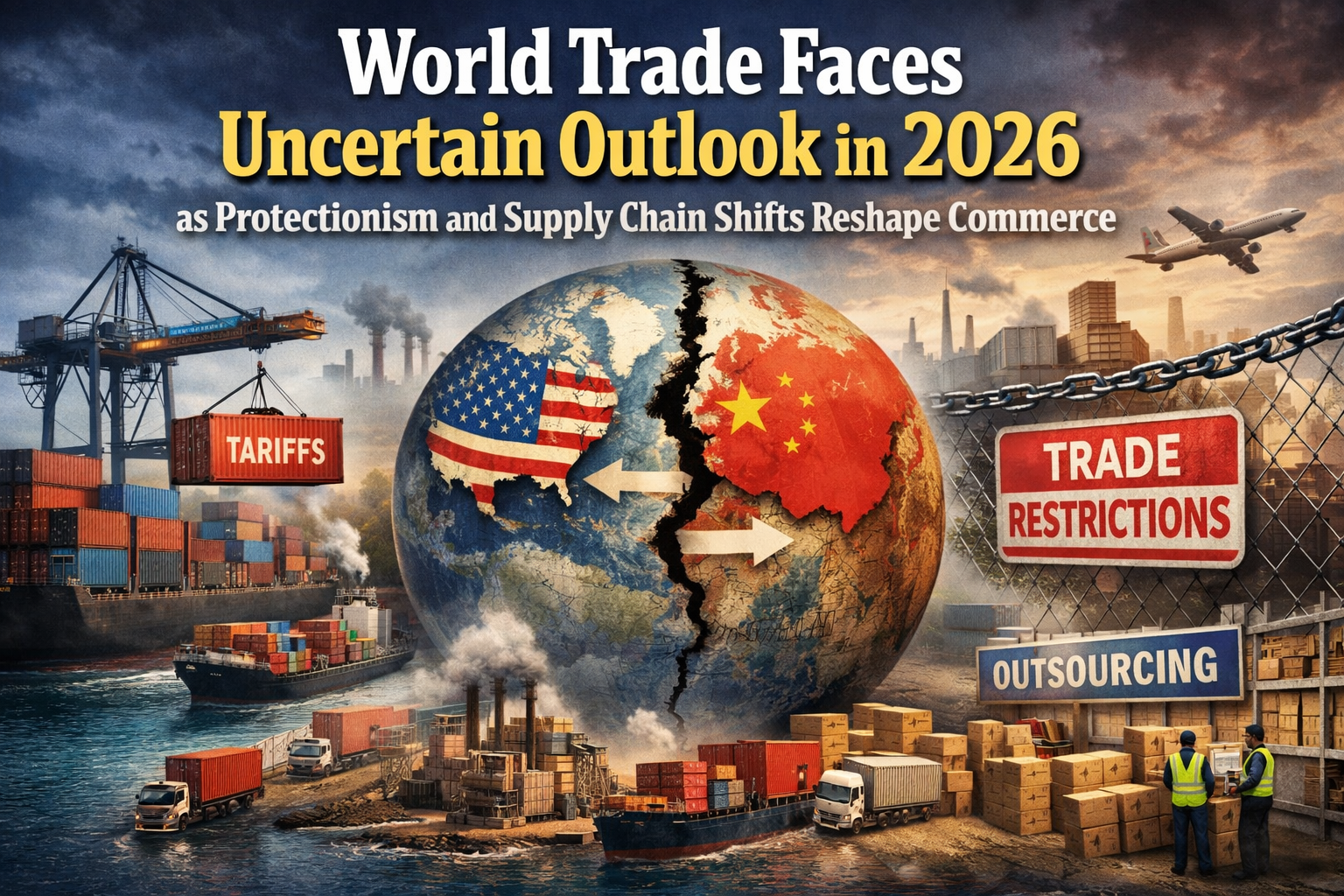
Geopolitical developments add another layer of complexity. Ongoing conflicts, trade tensions, and diplomatic uncertainty continue to influence investor behavior. Supply chains, while more resilient than in previous years, remain exposed to sudden disruptions. As a result, many companies are diversifying suppliers and reassessing global operations to reduce risk.
Despite these challenges, some analysts see reasons for guarded optimism. Inflation trends in many regions are moving in the right direction, financial systems remain broadly stable, and consumers have shown resilience. Technological investment, particularly in automation and digital services, continues to attract capital, suggesting that productivity gains could support longer-term growth.
Public sentiment, however, remains cautious. Rising living costs over recent years have left households sensitive to economic shocks, and trust in institutions varies widely across countries. Policymakers face the difficult task of balancing inflation control with growth support, all while maintaining public confidence.
As 2026 unfolds, markets are likely to remain highly responsive to economic data and policy signals. Investors, businesses, and governments alike are navigating a delicate transition period one defined not by crisis, but by uncertainty. Whether the year ultimately delivers a sustained recovery or renewed volatility will depend on how effectively inflation is contained, growth is supported, and global risks are managed in an increasingly interconnected world.