Satria Rezki Fernanda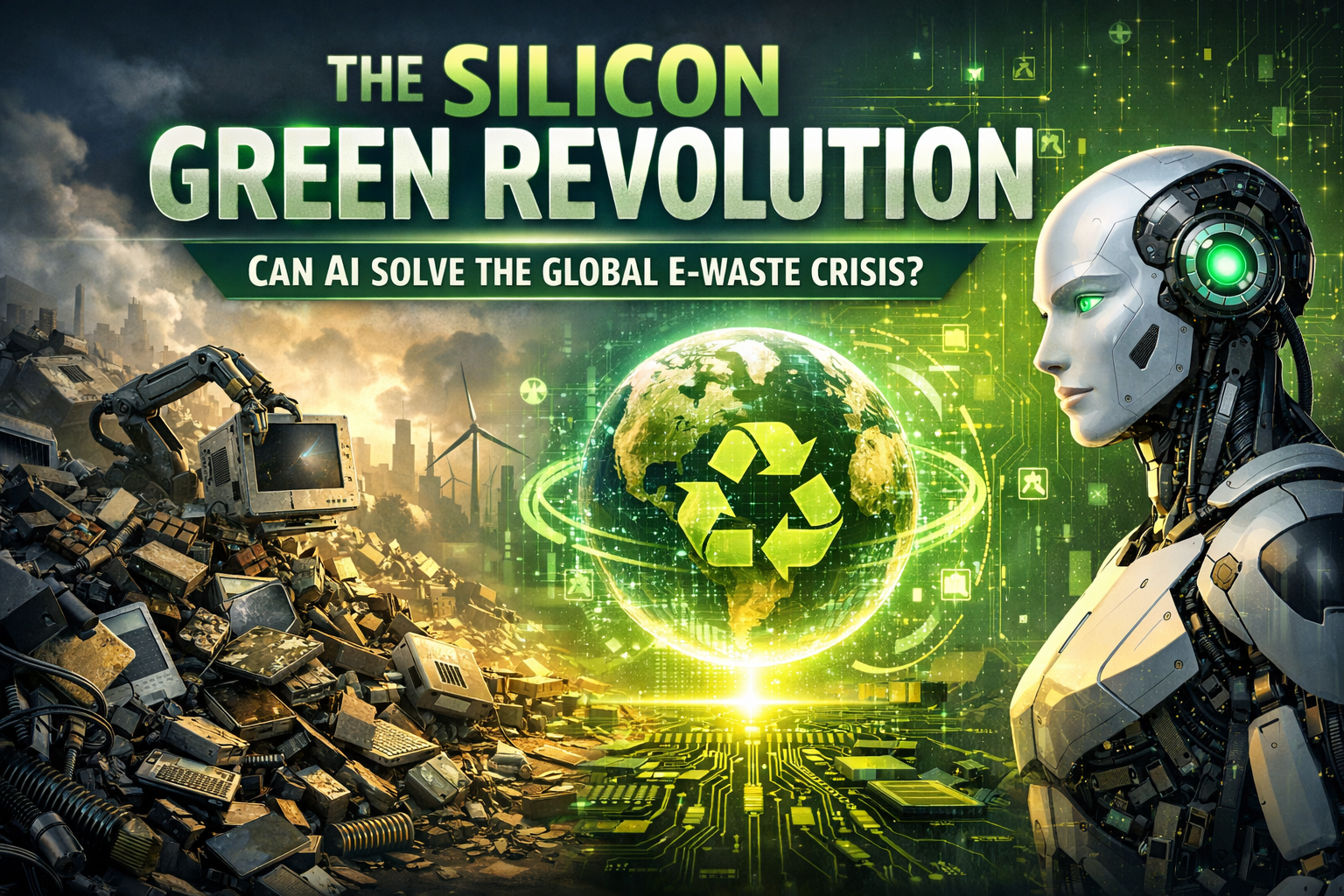
As the world’s appetite for the latest smartphones, tablets, and high-performance computing hardware reaches an all-time high, a silent crisis is mounting in the shadows of the digital age. Global electronic waste, or “e-waste,” has reached a record 62 million tonnes annually, a figure that is projected to rise by another 33% by 2030. However, a new wave of innovation is emerging from the very industry that created the problem. Artificial Intelligence (AI), often criticized for its massive energy consumption, is being repurposed as the primary weapon to dismantle the world’s fastest-growing waste stream.
The Growing Mountain of Circuits
According to the latest United Nations Global E-waste Monitor, only 22.3% of the world’s e-waste was documented as properly collected and recycled in the past year. The remainder—containing billions of dollars worth of gold, copper, and rare earth elements—ends up in landfills or is processed in informal sectors where workers are exposed to hazardous substances like mercury and lead.
“We are essentially throwing away a gold mine,” says Dr. Elena Rossi, an environmental scientist at the European Resource Institute. “The challenge isn’t just the volume of waste; it’s the complexity. Modern devices are glued and soldered together so tightly that manual disassembly is labor-intensive and often dangerous.”
Enter the “Smart” Recyclers
In recycling facilities across Northern Europe and East Asia, the traditional conveyor belt is getting a high-tech makeover. Startups are now deploying AI-driven robotic arms equipped with advanced computer vision systems. These machines can identify the specific model of a discarded phone or laptop from a single image, pinpointing the exact location of the battery, the motherboard, and the valuable sensors.
Unlike human sorters, these AI systems can work 24/7 with surgical precision. One such system, developed by a Zurich-based robotics firm, can process up to 1,000 devices per hour. It uses hyperspectral imaging—a technology that sees light beyond the human range—to distinguish between different types of plastics and metal alloys. This allows for a purity of sorted materials that was previously impossible, making the “circular economy” a more profitable reality for manufacturers.
Designing the Future with Generative AI
The impact of AI isn’t limited to the end of a product’s life; it is fundamentally changing how electronics are designed. Engineering teams are now using generative AI to create “Design for Disassembly” (DfD) frameworks. By inputting environmental constraints into AI models, designers can receive blueprints for devices that use biodegradable adhesives or modular components that “pop out” easily during the recycling process.
“The goal is to move away from the ‘black box’ design philosophy,” explains Marcus Thorne, a hardware lead at a major tech conglomerate. “If an AI can predict that a certain screw placement will make a phone 50% harder to recycle in five years, we change it now. We are using the machine to help us be more responsible creators.”
The Paradox of Progress
Despite these advancements, the relationship between AI and the environment remains a double-edged sword. The very chips required to run these sophisticated recycling algorithms are themselves a major source of e-waste and carbon emissions during production. The “compute” power required to train large-scale AI models consumes vast amounts of electricity, leading some critics to question if the environmental “cost” of the AI outweighs its benefits in waste management.
Environmental advocates argue that technology alone cannot solve the crisis. They point to the need for “Right to Repair” legislation, which would force companies to make replacement parts and repair manuals available to the public.
“AI is a fantastic tool for cleaning up the mess,” says activist Sarah Jenkins. “But the real solution is making sure the mess is smaller to begin with. We need to shift from a culture of ‘upgrade every year’ to one of longevity and durability.”
A Global Regulatory Shift
Governments are beginning to catch up. The European Union recently introduced the Digital Product Passport (DPP), a mandate that requires every electronic device sold in the EU to carry a digital record of its materials and repair history. AI systems will be used to manage this massive database, allowing recyclers to scan a device and immediately know its chemical composition.
In the United States, several states have passed laws that penalize manufacturers who do not meet minimum recycling quotas. These regulations are driving investment into the AI recycling sector, as companies realize that reclaiming minerals from old phones is becoming cheaper and more politically stable than mining them from the earth.
Looking Ahead
As we look toward 2030, the vision of a “zero-waste” tech industry remains a distant but reachable goal. The integration of AI into the waste management sector represents a critical shift from reactive cleaning to proactive resource management.
While the mountain of discarded circuit boards continues to grow, the intelligence buried within those very circuits may be the key to dismantling it. The success of this transition will depend not just on the brilliance of the algorithms, but on the willingness of global corporations to prioritize the planet over the next quarterly sales report.
In the race against ecological degradation, the silicon brain is proving to be our most versatile ally. The question remains: can we deploy it fast enough to turn the tide?