Satria Rezki Fernanda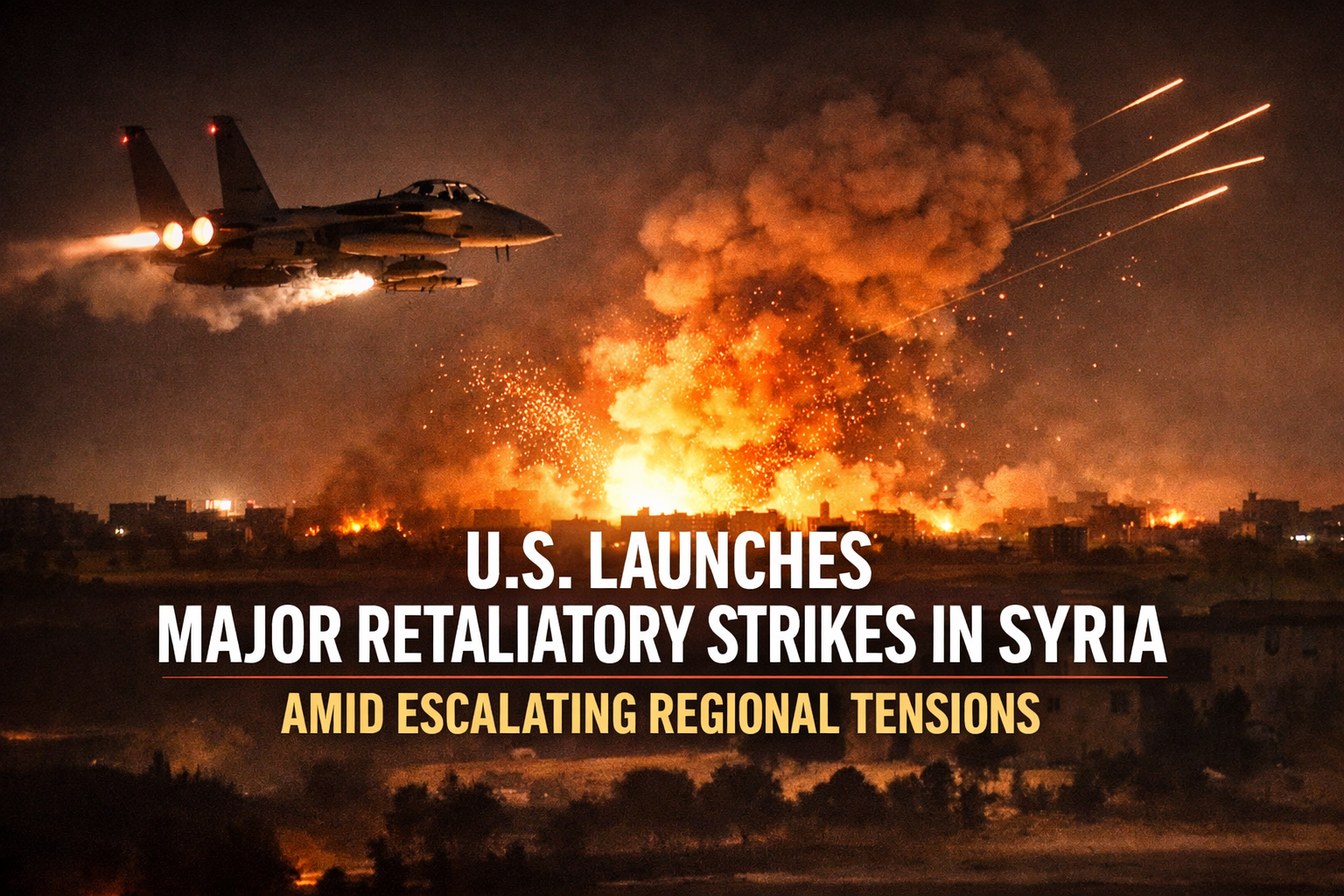
In a significant escalation of military activity in the Middle East, the United States military carried out a series of “large-scale” kinetic strikes against Islamic State (ISIS) targets in central Syria late Friday and early Saturday. The operation, authorized by the White House, comes as a direct response to a deadly attack last weekend in Palmyra that claimed the lives of three Americans, including two service members. Pentagon officials described the mission as a “precision-driven effort to eliminate high-value insurgent infrastructure” and to degrade the group’s capability to plan further external operations. Initial assessments from the Syrian Observatory for Human Rights suggest that at least five militants were killed, though the full extent of the damage to the underground bunker complexes and logistics hubs targeted remains under evaluation.
The timing of these strikes coincides with a period of profound instability across the Levant. While the primary focus of the U.S. mission was counter-terrorism, the strikes occur against a backdrop of a fraying ceasefire between Israel and Hezbollah in neighboring Lebanon. Diplomatic monitors have noted that violations of the November truce have become increasingly frequent, with reports of cross-border fire occurring nearly every four hours. Regional analysts suggest that the U.S. show of force in Syria is intended not only to punish ISIS but also to project a message of continued military presence and resolve to other actors in the region, including Iran-backed militias and the remnants of the Syrian regime’s fragmented security apparatus.
In Washington, the strikes have reignited a fierce debate over the scope of American involvement in overseas conflicts. The administration has defended the move as a necessary act of self-defense, emphasizing that the protection of U.S. personnel is a non-negotiable priority. However, some members of Congress have called for a more transparent long-term strategy, expressing concerns that reactive strikes without a broader diplomatic roadmap could lead to “mission creep.” Meanwhile, Secretary of State Marco Rubio, in a year-end briefing, reiterated that the U.S. seeks to partner with regional allies to foster stability but warned that “lethal threats against American citizens will be met with overwhelming force.”
Beyond the immediate military action, the geopolitical landscape is being further complicated by legal and civil developments. Just as the strikes were unfolding, the U.S. Justice Department began the staged release of thousands of government files related to the Jeffrey Epstein case, a move that has dominated domestic headlines and distracted from the overseas military engagement. The convergence of high-stakes military intervention and domestic political transparency has created a complex narrative for the administration to navigate as it approaches the end of the calendar year.
In Europe, leaders are watching the developments in Syria with growing apprehension, fearing that further destabilization could trigger new waves of migration or embolden radicalized domestic cells. At a high-level meeting in Berlin, representatives from the European Union urged for a “de-escalation of all fronts,” emphasizing that the focus should remain on the fragile peace talks in Ukraine rather than a widening conflict in the Middle East. Despite these calls for restraint, the reality on the ground in Syria remains volatile, with U.S. Central Command indicating that they remain “postured and ready” to conduct additional strikes if the threat level does not subside.
Environmental groups have also raised concerns regarding the humanitarian and ecological impact of continued warfare in the region. As winter storms batter the Levant, millions of displaced civilians are already facing life-threatening conditions. The destruction of infrastructure—even that used by insurgent groups—often has a cascading effect on the availability of clean water and electricity for nearby civilian populations. As the year 2025 draws to a close, the international community finds itself at a crossroads, balancing the imperative of national security against the increasingly urgent need for humanitarian relief and diplomatic reconciliation in one of the world’s most enduring conflict zones.