Satria Rezki Fernanda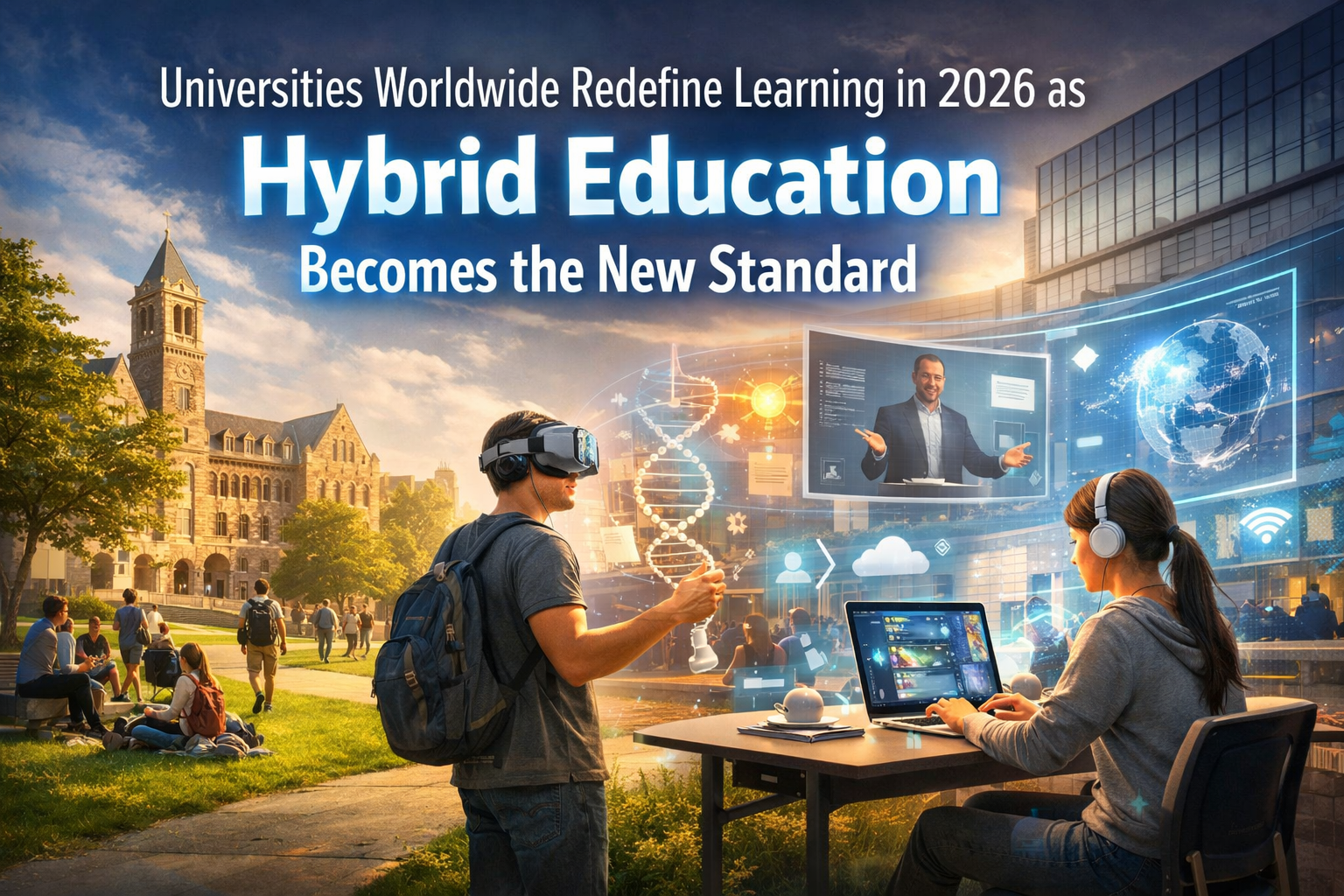
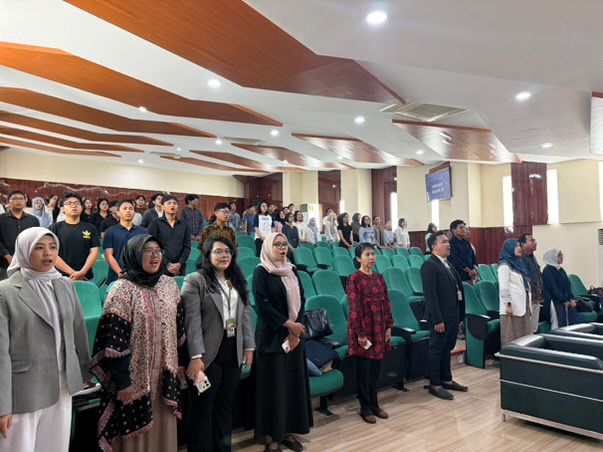
Universities around the world are entering 2026 with a renewed vision of higher education, as hybrid learning models move from temporary solutions to permanent institutional strategies. What began years ago as an emergency response to global disruption has evolved into a fundamental transformation of how knowledge is delivered, assessed, and experienced. Today, a growing number of universities are redesigning curricula, campuses, and student services to reflect a blended reality that combines in-person and digital learning.
Academic leaders say the shift is driven by both demand and necessity. Students increasingly expect flexibility, access to digital resources, and learning experiences that fit diverse lifestyles. At the same time, institutions face rising operational costs, demographic changes, and pressure to demonstrate real-world relevance. Hybrid education, many administrators argue, offers a way to address these challenges while expanding access and maintaining academic standards.
In practical terms, hybrid learning means more than recorded lectures. Universities are investing in interactive platforms that support live discussions, collaborative projects, and real-time feedback. Classrooms are being redesigned with advanced audio-visual systems to accommodate students attending both physically and remotely. Professors are receiving training to adapt teaching methods, shifting from lecture-centered approaches to more discussion-based and project-driven formats.
Students report mixed but increasingly positive experiences. Many appreciate the ability to manage their schedules more effectively, particularly those balancing studies with work or family responsibilities. International students benefit from reduced travel costs and visa uncertainty, while students with disabilities often find digital tools more accommodating. However, concerns remain about screen fatigue, reduced social interaction, and unequal access to reliable internet and devices.
Universities are responding by emphasizing community-building alongside flexibility. Campuses are positioning themselves as hubs for collaboration, research, and social life rather than solely as lecture spaces. In-person time is increasingly reserved for seminars, labs, mentoring, and extracurricular activities that are difficult to replicate online. Administrators say this approach helps preserve the social and developmental aspects of university life.
Assessment methods are also evolving. Traditional high-stakes exams are being supplemented or replaced by continuous assessment, open-book testing, and project-based evaluation. Educators argue that these methods better reflect real-world problem-solving and reduce incentives for academic dishonesty. At the same time, institutions are deploying digital proctoring tools and plagiarism detection software, sparking debates about privacy and surveillance.
The rise of hybrid education is reshaping the role of faculty. Professors are now expected to be not only subject-matter experts but also content designers and digital facilitators. While some welcome the opportunity to innovate, others express concern about increased workloads and the pace of change. Faculty unions in several countries have called for clearer guidelines, additional support, and recognition of the time required to redesign courses.
Technology companies are playing a growing role in the education ecosystem. Partnerships between universities and edtech firms have expanded, offering platforms for learning management, virtual laboratories, and AI-assisted tutoring. Supporters argue that these tools can personalize learning and improve outcomes, while critics warn of over-commercialization and dependence on private providers.
Equity remains a central issue in the hybrid transition. While digital learning can widen access, it can also deepen existing inequalities if students lack adequate resources. Universities and governments are addressing this through device loan programs, subsidized internet access, and investments in digital infrastructure. Policymakers stress that hybrid education must be inclusive by design, not just in theory.
The global nature of hybrid learning is also changing international collaboration. Joint degrees, cross-border classrooms, and virtual exchange programs are becoming more common, allowing students to learn alongside peers from different countries without relocating. Academic leaders see this as an opportunity to internationalize education in a more sustainable and affordable way.
Employers are closely watching these developments. Many say graduates of hybrid programs often demonstrate strong digital communication skills, self-discipline, and adaptability. However, they also emphasize the continued importance of teamwork, leadership, and interpersonal skills typically developed through in-person interaction. Universities are responding by integrating internships, group projects, and experiential learning into hybrid models.
Students themselves are playing a more active role in shaping education. Feedback mechanisms, student-led innovation labs, and co-designed courses are becoming more common. University leaders say this participatory approach helps ensure that hybrid systems meet real needs rather than administrative assumptions.
Despite progress, challenges persist. Ensuring consistent quality across online and in-person components remains difficult, particularly for large institutions. There are also unresolved questions about tuition pricing, intellectual property for digital content, and long-term sustainability. Some critics argue that hybrid education risks diluting academic rigor if not carefully managed.
Yet momentum continues to build. Surveys show that a majority of students and faculty now prefer some form of hybrid learning over purely traditional models. Governments are updating accreditation frameworks to reflect new delivery methods, signaling institutional acceptance of change.
As universities adapt to a rapidly evolving world, hybrid education is no longer viewed as a compromise, but as a strategic choice. In 2026, higher education stands at a crossroads where flexibility, technology, and human connection must coexist. How well institutions balance these elements will shape not only academic success, but the future of learning itself.