Satria Rezki Fernanda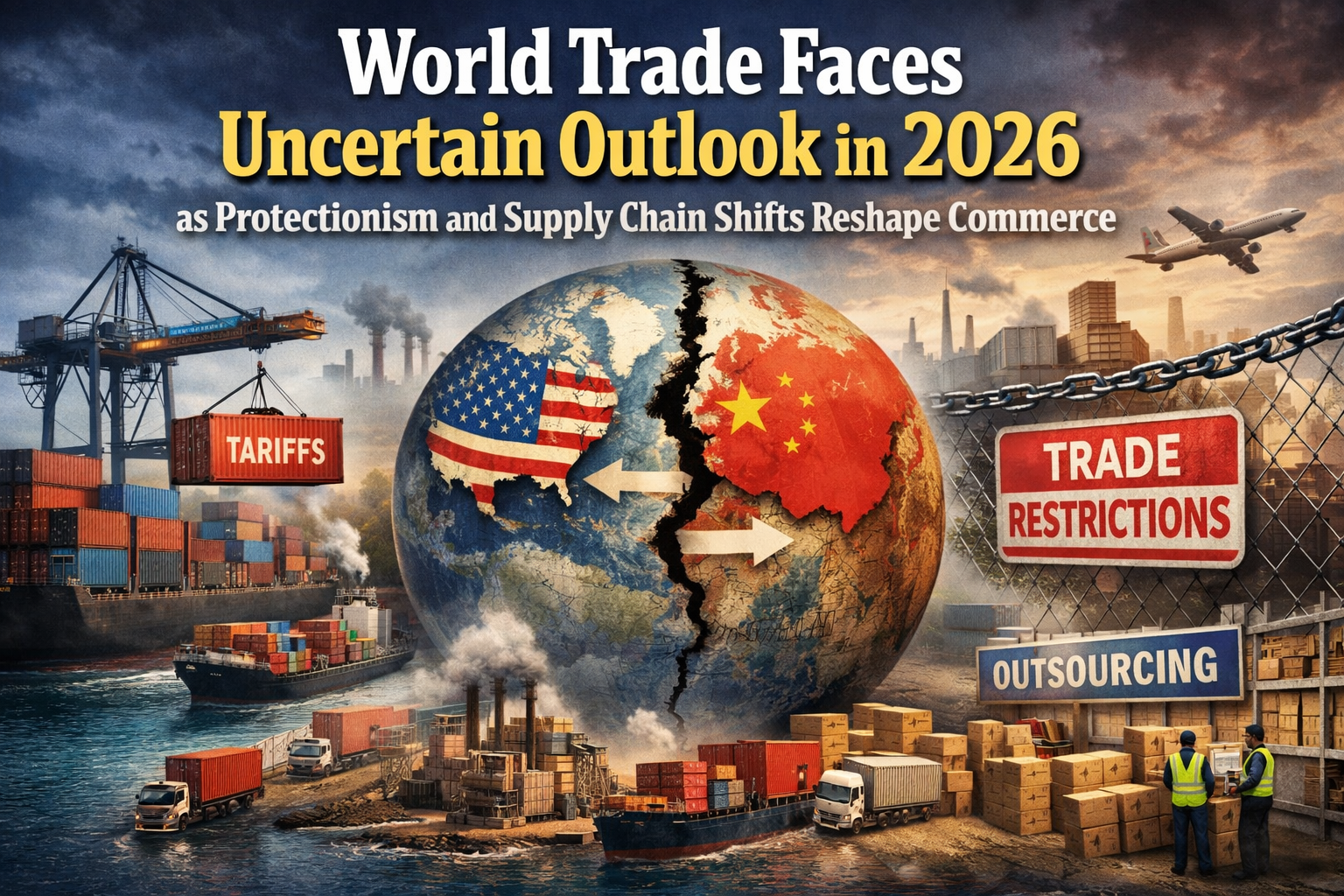
Global trade is entering a period of heightened uncertainty in 2026, as governments and businesses adjust to a changing economic landscape marked by protectionist policies, regionalization, and ongoing supply chain realignments. While international commerce continues to grow in absolute terms, the rules, routes, and risks associated with global trade are evolving in ways that could have long-term consequences for economic growth and cooperation.
Trade officials report that cross-border goods flows have stabilized after years of disruption, but growth remains uneven across regions. Some economies are benefiting from diversification and nearshoring strategies, while others struggle with reduced demand and limited access to key markets. Economists note that global trade is no longer driven purely by efficiency and cost, but increasingly by strategic considerations such as security, resilience, and political alignment.
One of the most significant trends is the shift away from highly concentrated supply chains. Companies that once relied on single-country manufacturing hubs are spreading production across multiple regions to reduce exposure to shocks. Southeast Asia, parts of Latin America, and Eastern Europe are emerging as alternative manufacturing centers, attracting investment from firms seeking to balance cost, stability, and market access.
Major economies are playing a central role in reshaping trade patterns. The United States and the European Union have expanded industrial policies designed to strengthen domestic production in sectors such as semiconductors, clean energy, and critical minerals. Supporters argue that these measures enhance resilience and national security, while critics warn they risk distorting markets and triggering retaliatory actions.
China remains a dominant force in global trade, but its role is also evolving. While it continues to be a key manufacturing and export hub, some multinational companies are reducing dependence on Chinese supply chains due to geopolitical tensions and regulatory uncertainty. Analysts emphasize, however, that fully disengaging from China is neither simple nor likely in the near term, given its scale, infrastructure, and integration into global commerce.
Trade barriers are becoming more prominent. Tariffs, export controls, and investment restrictions are increasingly used as policy tools, often justified on security or strategic grounds. The result, economists say, is a more fragmented global trading system, where access depends not only on price and quality but also on political relationships. Smaller economies, in particular, face challenges navigating this complex environment.
At the same time, regional trade agreements are gaining importance. Countries are strengthening ties within geographic blocs to secure supply chains and reduce reliance on distant partners. These agreements often go beyond tariffs, covering digital trade, labor standards, and environmental rules. Supporters argue that such frameworks provide stability, while critics worry they could deepen divisions between regions.
Digital trade is emerging as a bright spot amid uncertainty. Cross-border services, e-commerce, and data-driven business models continue to expand, offering new opportunities for growth. However, differing regulations on data privacy, taxation, and digital services are creating new frictions. Businesses operating across borders must navigate a patchwork of rules that can increase costs and limit scale.
Logistics and shipping remain key constraints. While congestion has eased compared to previous years, transportation costs remain volatile due to fuel prices, security concerns, and infrastructure limitations. Any disruption along major trade routes can quickly affect delivery times and inventories, reinforcing the importance of supply chain flexibility.
Developing countries face mixed prospects. Those able to attract investment through stability, skilled labor, and infrastructure stand to benefit from supply chain diversification. Others risk being left behind if they lack the capacity to meet new regulatory or sustainability standards increasingly demanded by major markets. Development experts warn that unequal integration could widen global economic disparities.
Environmental considerations are also influencing trade policy. Carbon border measures, sustainability requirements, and pressure to reduce emissions across supply chains are becoming more common. While these initiatives aim to address climate change, exporters in poorer countries argue they may act as de facto trade barriers if support for compliance is insufficient.
Businesses are responding by reassessing risk management strategies. Inventory buffers, supplier diversification, and greater use of data analytics are becoming standard practices. Executives say resilience now ranks alongside cost and speed as a core priority in supply chain planning, reflecting lessons learned from recent global shocks.
International institutions are urging cooperation to prevent excessive fragmentation. Organizations responsible for overseeing global trade rules warn that unchecked protectionism could undermine decades of progress in economic integration. They emphasize the need for dialogue, transparency, and updated frameworks that reflect modern trade realities without sacrificing openness.
Public opinion plays an increasingly influential role. In many countries, voters are more skeptical of globalization, associating it with job losses or economic insecurity. Political leaders are responding by promising to protect domestic industries and workers, even as they acknowledge the benefits of trade. This tension complicates efforts to promote liberalization.
Looking ahead, analysts suggest that global trade in 2026 is not collapsing, but transforming. The era of hyper-globalization may be giving way to a more cautious, strategic model of commerce. Whether this transition leads to greater stability or deeper division will depend on how governments and businesses manage competing priorities.
The challenge for policymakers is to strike a balance between resilience and openness, ensuring that trade continues to support growth and development without exposing economies to excessive risk. For businesses, adaptability will be essential in navigating a world where trade rules and relationships are in flux.
As the global economy adjusts, trade remains a powerful force shaping prosperity and cooperation. The choices made in 2026 will influence whether international commerce becomes a source of renewed collaboration — or a fault line in an increasingly fragmented world.